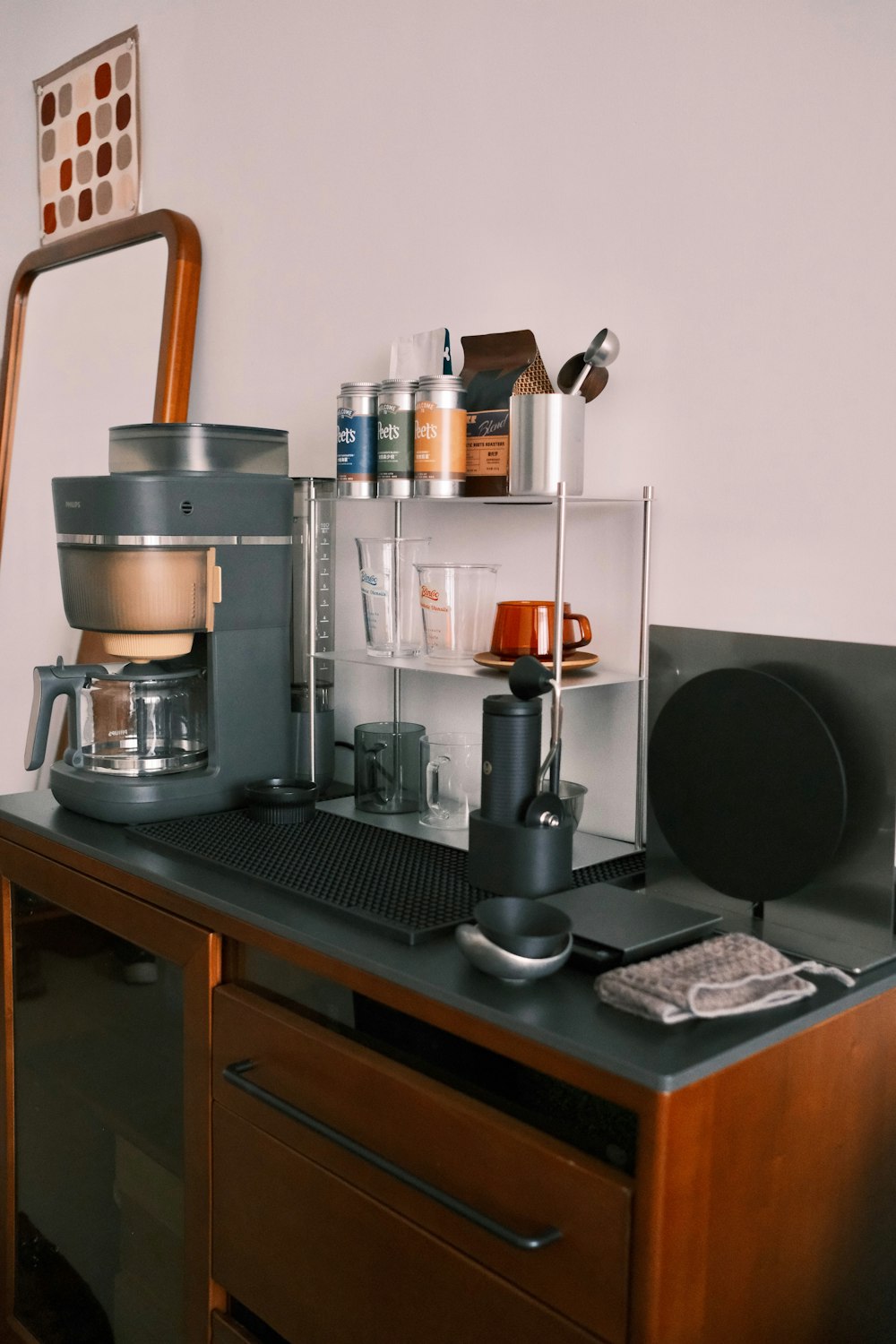
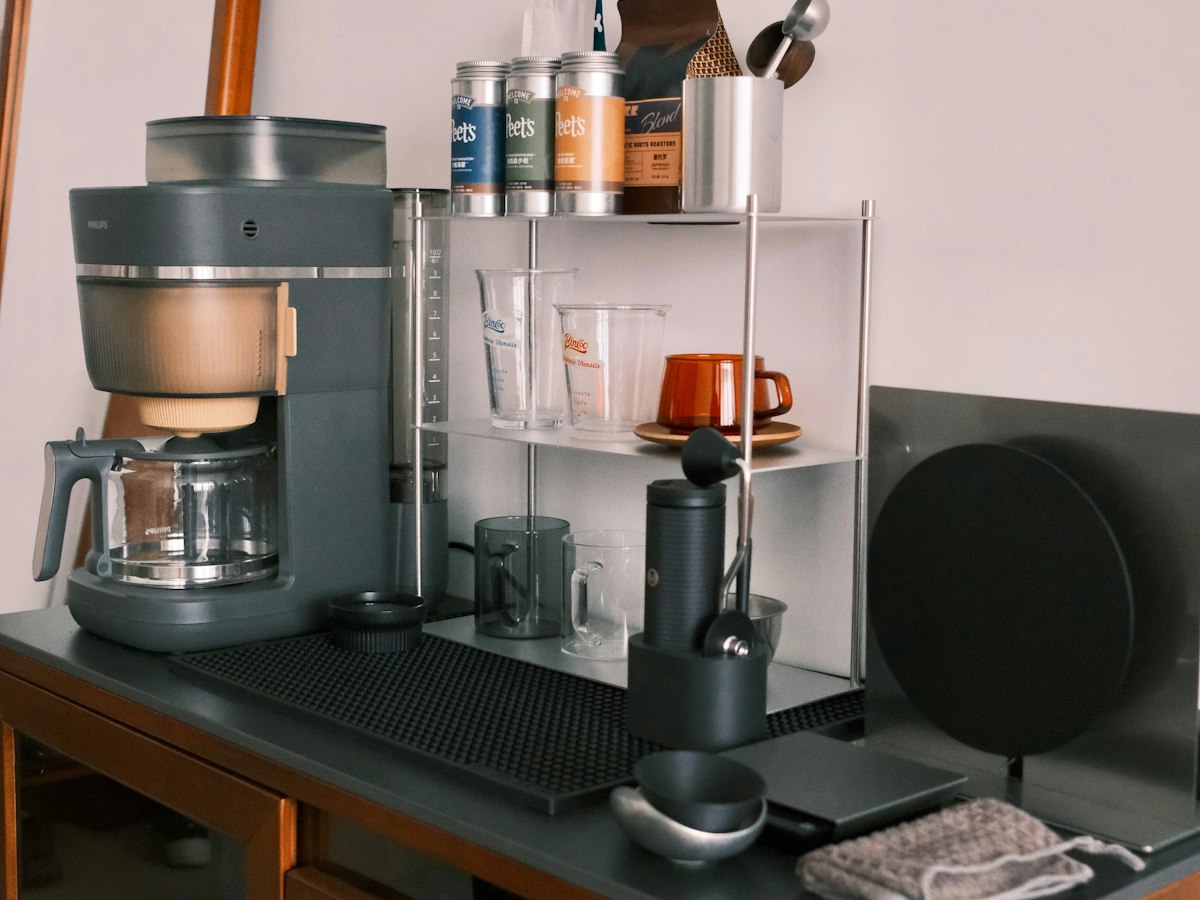
There are three realistic ways to make good coffee in a tiny kitchen — manual, pod, or entry-level espresso — and the right one depends more on counter space and how rushed your mornings actually are than on which makes the “best” cup in the abstract. Here’s what each route actually costs in money, counter footprint, and noise, plus a grinder worth adding once you know you’ll use it.
Best overall: AeroPress Original
AeroPress
AeroPress Original
No counter footprint at all when it's not in use, no power socket, and it makes genuinely good coffee for well under the price of the other routes here — the realistic default for a tiny kitchen.
£30–40
Check price at Amazon UK (link coming soon)
The honest default for most small kitchens: it lives in a cupboard between uses, needs no power socket, and the coffee it makes is closer to a proper espresso-adjacent cup than most pod machines manage. The trade-off is time and attention — roughly two to three minutes of actual brewing, versus a button press on a pod machine — which is the whole reason the next pick exists for rushed mornings.
Fastest routine: Vertuo Pop
Nespresso
Vertuo Pop
The most compact pod machine in the range, with a one-button routine that suits a kitchen you're moving through quickly rather than lingering in.
£70–100
Check price at Nespresso (link coming soon)
A pod machine’s real value isn’t the coffee quality, which is decent rather than exceptional — it’s the near-zero decision-making required at 7am. This is the smallest footprint in the current Vertuo range, which matters if the machine needs to live permanently on a narrow counter rather than be put away. Budget for the ongoing capsule cost (see the FAQ below) against the time it saves.
Best real espresso: Dedica Style EC685
De'Longhi
Dedica Style EC685
The narrowest genuine espresso machine sold at this price — 15cm wide — for a counter that can't spare a standard-width machine's footprint.
£150–200
Check price at Currys (link coming soon)
If you actually want espresso-based drinks rather than filter-style coffee, this is the entry point that doesn’t demand a full-width machine and a dedicated grinder alongside it. It’s the loudest and least “invisible” of the three routes here — factor that in if you’re making coffee before anyone else in the flat or building is awake.
Buy pre-ground espresso-specific coffee to start rather than a hand grinder — espresso needs a much finer, more consistent grind than an AeroPress or pour-over, and most hand grinders (including the pick below) struggle to hit it evenly. A proper espresso-grade grinder is a separate, considerably more expensive purchase, so this route only really pays off once you’re confident you’ll keep using it daily. The steam wand on a machine at this price is basic — fine for texturing milk for a flat white, not the microfoam a trained barista pulls, which is a fair trade for the size and price.
Worth adding later: C2 Hand Grinder
Timemore
C2 Hand Grinder
A hand grinder does the one thing pre-ground coffee can't — freshly ground beans — without the counter space or noise of an electric burr grinder.
£30–45
Check price at Amazon UK (link coming soon)
Not a starting purchase — add this once you’ve settled on the manual or espresso route and noticed you actually care about the jump from pre-ground to fresh-ground. It takes no permanent counter space, stores in a drawer, and is silent compared with an electric burr grinder, which matters as much as the coffee upgrade itself in a small kitchen shared with thin walls.
It suits the AeroPress route well and espresso less well — hand grinders generally can’t produce a fine, consistent enough grind for espresso, so pair it with manual or pour-over brewing rather than the Dedica pick above. Expect a couple of minutes of hand-cranking per cup, which is part of the appeal for some people and a chore for others; worth trying before committing rather than assuming either way.
Milk, if you want it
None of the three routes above need milk to work, but if flat whites or lattes are the actual goal rather than black coffee, that changes which route makes sense. A pod machine’s own milk frother attachment (sold separately for most models) or a small handheld electric frother works with any of the three routes and costs under £20 — usually a better first step than assuming you need the espresso machine’s built-in steam wand specifically. Only the Dedica pick above has a steam wand at all; AeroPress and pod coffee both pair fine with a separate frother.
What this guide doesn’t recommend
This guide doesn’t recommend sub-£150 “bean-to-cup” super-automatic machines — the kind that grind, tamp and pull a shot at the press of one button. At that price the internal grinder and pump are usually the first parts to fail, they’re the loudest option of everything covered here, and repairs on an integrated machine are rarely worth it against the original price. Genuine bean-to-cup machines exist and work well, but reliably start much higher than £300, which is outside this guide’s budget.
How to choose
Match the route to your actual mornings, not an aspirational routine. A five-minute manual brew you’ll skip when rushed is worse than a one-button pod machine you’ll actually use.
Measure your counter before choosing espresso. A fixed machine plus portafilter working space plus a possible grinder needs more permanent counter than most tiny kitchens can spare without it becoming the kitchen’s main feature.
Weigh noise if walls are thin. Manual is silent, pods are quiet, espresso machines and their grinders are the loudest — relevant for an early coffee before a neighbour’s alarm goes off.
Don’t buy the grinder first. Start with pre-ground beans from a decent roaster and add a grinder only once you’ve confirmed you’ll use the extra step.
Factor in cleaning and descaling. An AeroPress rinses in seconds. Pod and espresso machines both need periodic descaling — check how often before buying, since hard-water areas of the UK need it more frequently, and a machine left unscaled for too long is the most common reason an otherwise fine espresso machine ends up tasting bitter or breaking early.
Frequently asked questions
- Do I need a grinder at all?
- Only if you want fresh-ground coffee, which is a genuine step up in flavour over pre-ground — but pre-ground beans from a decent roaster are perfectly fine for daily use, and skipping a grinder saves both counter space and around £30–150 depending on which one. Start without one and add a hand grinder later if you notice you care.
- Which route is quietest for a flat with thin walls?
- Manual (AeroPress or a simple pour-over) is silent. Pod machines are quiet but not silent — a short pump cycle of a few seconds. Entry espresso machines are the loudest of the three, particularly the pump and any grinder attached, and worth avoiding for an early-morning coffee in a flat where a neighbour's bedroom wall backs onto the kitchen.
- How much counter space does each route actually need?
- Manual brewing needs almost none permanently — an AeroPress and a kettle can live in a cupboard between uses. A pod machine needs a fixed spot roughly 15–20cm wide plus a water tank refill routine. An entry espresso machine needs the most: fixed counter space, plus room in front to work the portafilter, plus somewhere for a grinder if you're adding one — measure your actual counter before choosing this route.
- Are pod capsules actually worth the ongoing cost?
- Per cup, capsules cost roughly two to three times more than the same coffee brewed manually or from a bean-to-cup machine, and most aren't recyclable through standard kerbside collection — check whether your capsule brand runs its own recycling scheme, since several UK ones do, rather than assuming general recycling. Worth it for convenience if that's genuinely what you need; not the cheapest route over a year of daily use.
- What will I actually keep using in six months?
- Whichever route matches how rushed your actual mornings are, not the one that looks best in a kitchen photo. If you're out the door in five minutes most days, a pod machine's one-button routine beats an AeroPress you'll skip when you're late — however much better the AeroPress coffee is on the mornings you do have time.