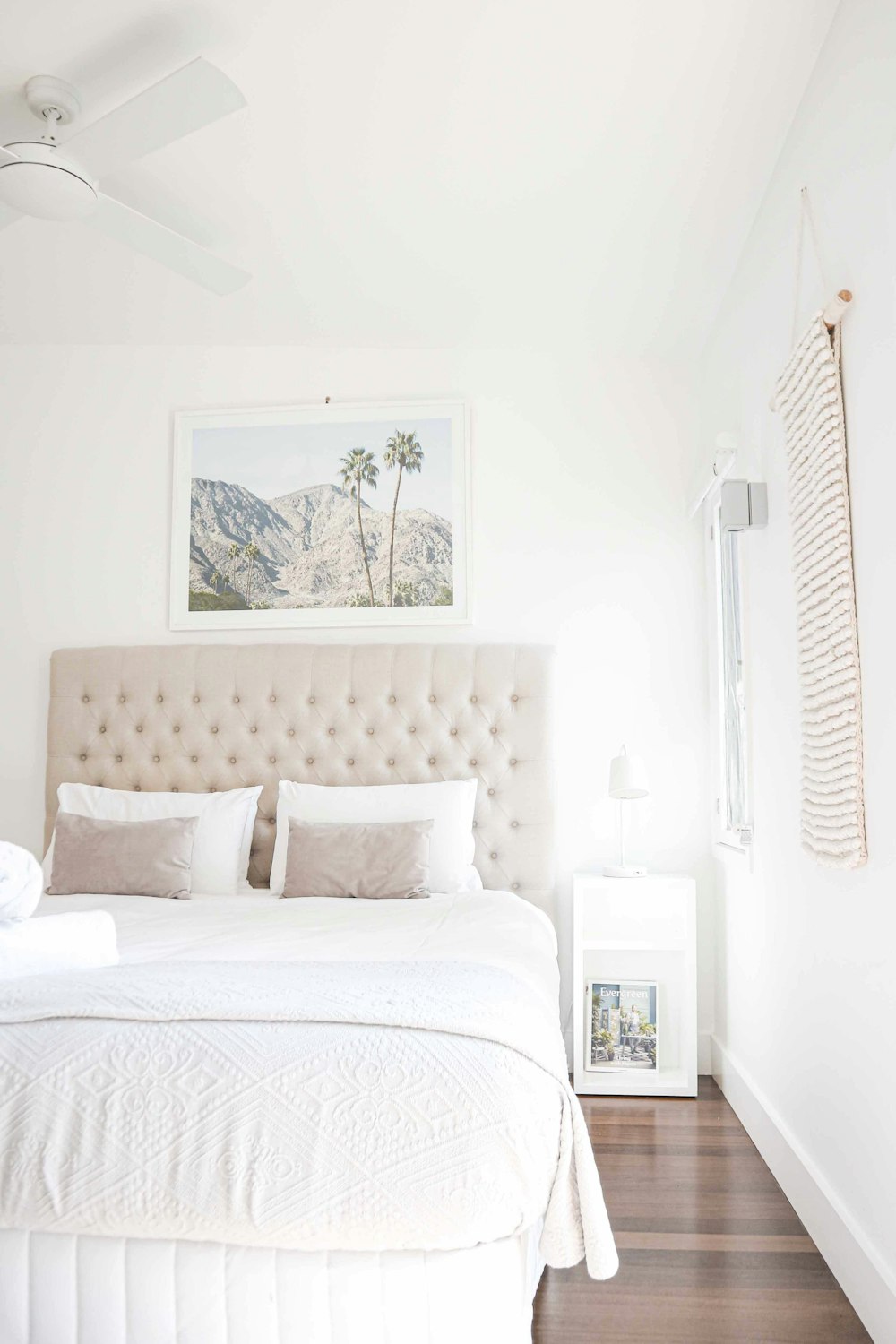

The mattress that suits a first flat isn’t necessarily the most expensive one — it’s the one with a firmness that matches how you actually sleep and a trial period you can genuinely use without a car or a lift. Boxed mattresses shipped compressed in a box are the realistic option for a flat with narrow stairs and no delivery lift, and the four below cover firmness and budget range across that format.
Best overall: Original Hybrid Mattress
Emma
Original Hybrid Mattress
A medium-firm hybrid that works for most sleeping positions if you can only own one mattress, with springs plus foam rather than foam alone.
£300–450
Check price at Emma (link coming soon)
Medium-firm is the safest single choice if you don’t know your firmness preference yet or you switch sleeping positions through the night, and a hybrid construction (pocket springs plus a foam comfort layer) generally handles that middle ground better than foam alone, which tends to be either clearly soft or clearly firm with less in between. It ships compressed in a box light enough for one person to carry up a narrow stair, which matters more than it sounds like it should the first time you’re doing it alone on a third-floor walk-up.
Best under £250: Memory Foam Mattress, Firm
Silentnight
Memory Foam Mattress, Firm
The cheapest mattress here that still comes with a proper trial period and named firmness rating, rather than an unrated foam block.
£150–250
Check price at Silentnight (link coming soon)
The gap between this and the Emma pick above isn’t really comfort on night one — it’s edge support, cooling, and how the mattress holds up after two or three years of nightly use. For a first flat you might be in for a year or two, that gap often isn’t worth another £150–200. Firm suits back and front sleepers better than side sleepers; if you sleep on your side, the Simba pick below is the better budget-adjacent fit even at a higher price.
Best for side sleepers: Hybrid Mattress, Soft-Medium
Simba
Hybrid Mattress, Soft-Medium
Softer at the shoulder and hip than the other picks here, which matters specifically if you sleep on your side.
£400–600
Check price at Simba (link coming soon)
Side sleeping puts your full body weight through the point of your shoulder and hip, which a too-firm mattress resists rather than lets sink slightly — over a night that shows up as shoulder pain or a numb arm, not a subtle preference. This is the pick to choose specifically for that reason, not as a general upgrade — if you’re a back or front sleeper, it’ll likely feel too soft.
Best for a single room: Essentials Boxed Mattress, Single
eve Sleep
Essentials Boxed Mattress, Single
A properly rated single mattress at a price that makes sense for a box room or a short-term let, without dropping the trial period.
£150–200
Check price at eve Sleep (link coming soon)
Single mattresses don’t get much attention from most “best mattress” content, which tends to default to double or king examples — worth a specific mention for a box room, a short flat share, or a second bedroom used as a guest room or office-with-a-sofa-bed-alternative.
What this guide doesn’t recommend
This guide doesn’t recommend unbranded mattresses sold with no stated firmness rating, no named foam density, and no trial or returns process — common on general marketplace listings at very low prices. Without a firmness rating you’re guessing whether it’ll suit how you sleep, and without a genuine trial period, a mattress that turns out wrong is either a loss or a difficult private resale, which is a bigger problem in a flat with narrow stairs and no lift than it sounds.
How to choose
Match firmness to sleeping position first, budget second. The wrong firmness for how you sleep isn’t fixed by spending more — a soft mattress that’s too soft for a back sleeper is still too soft at twice the price.
Read the actual return process, not just the trial length. A “100-night trial” that requires you to personally repackage and carry a double mattress downstairs alone is a very different offer to one where the brand collects it as-is. Check before you buy, not when you’re trying to return it.
Know what you’re paying above £400 for. Mostly edge support, cooling, and longevity — real, but worth less if you expect to move again within a year or two of the tenancy.
Check the base compatibility. Most hybrid and memory foam mattresses suit both slatted and solid bases, but a small number of budget foam mattresses specify a solid or closely-slatted base. Two minutes on the listing avoids a mattress sagging between slats a year in.
Frequently asked questions
- How do I know what firmness I need?
- It's mostly about sleeping position, not preference for its own sake. Side sleepers generally need a softer mattress so the shoulder and hip can sink in slightly and keep the spine level — a too-firm mattress under a side sleeper tends to cause shoulder pain. Back and front sleepers generally do better on medium-firm to firm, which stops the hips sinking out of line with the shoulders. If you switch positions through the night, medium-firm is the safest single choice.
- Do I need a specific mattress for a divan or slatted bed base?
- Check the base type before you buy. Most boxed hybrid and memory foam mattresses work on both slatted and solid divan bases, but a handful of budget foam mattresses specify a solid or closely-slatted base to avoid the foam sagging between wide-spaced slats — worth a two-minute check on the listing rather than an assumption.
- How do returns actually work if I don't have a car or a lift?
- This is the detail that catches people out in a flat. Most UK mattress brands offer a 100-night trial with free collection if it doesn't work out, but collection means the mattress needs to be rolled back into its original packaging or a bag the brand provides — genuinely difficult alone with a double mattress in a third-floor flat with no lift. Read the actual return process before ordering, not just the headline trial length, and ask a housemate or friend to be free around the point you'd need to decide.
- Is a more expensive mattress actually better, or just better marketed?
- Above roughly £400 for a double, you're mostly paying for edge support, more sophisticated spring zoning, and cooling materials — real differences, but ones that matter most if you're a heavier sleeper, sleep with a partner, or run hot at night. Below that, the main difference between a £150 and a £350 mattress is usually the trial period and build quality holding up for longer, not comfort on night one.
- When is the cheap mattress actually fine?
- For a short let, a spare room, or a first flat you know you'll leave within a year or two, a £150–200 mattress with a named firmness and at least a 30-night trial is a reasonable choice — buying the top tier for a bed you might not keep past the tenancy doesn't make financial sense. Spend more when it's the bed you expect to sleep in for several years.