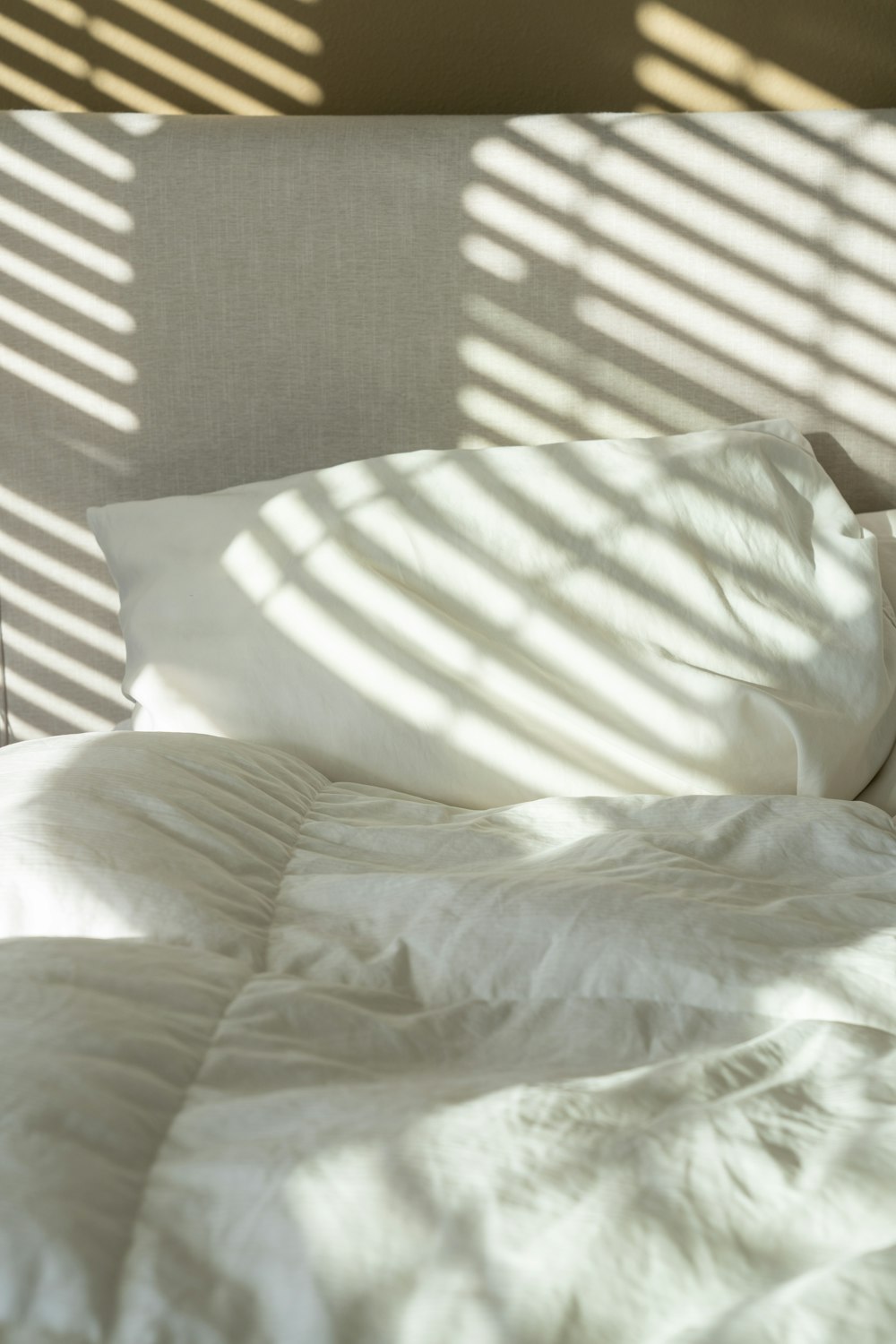
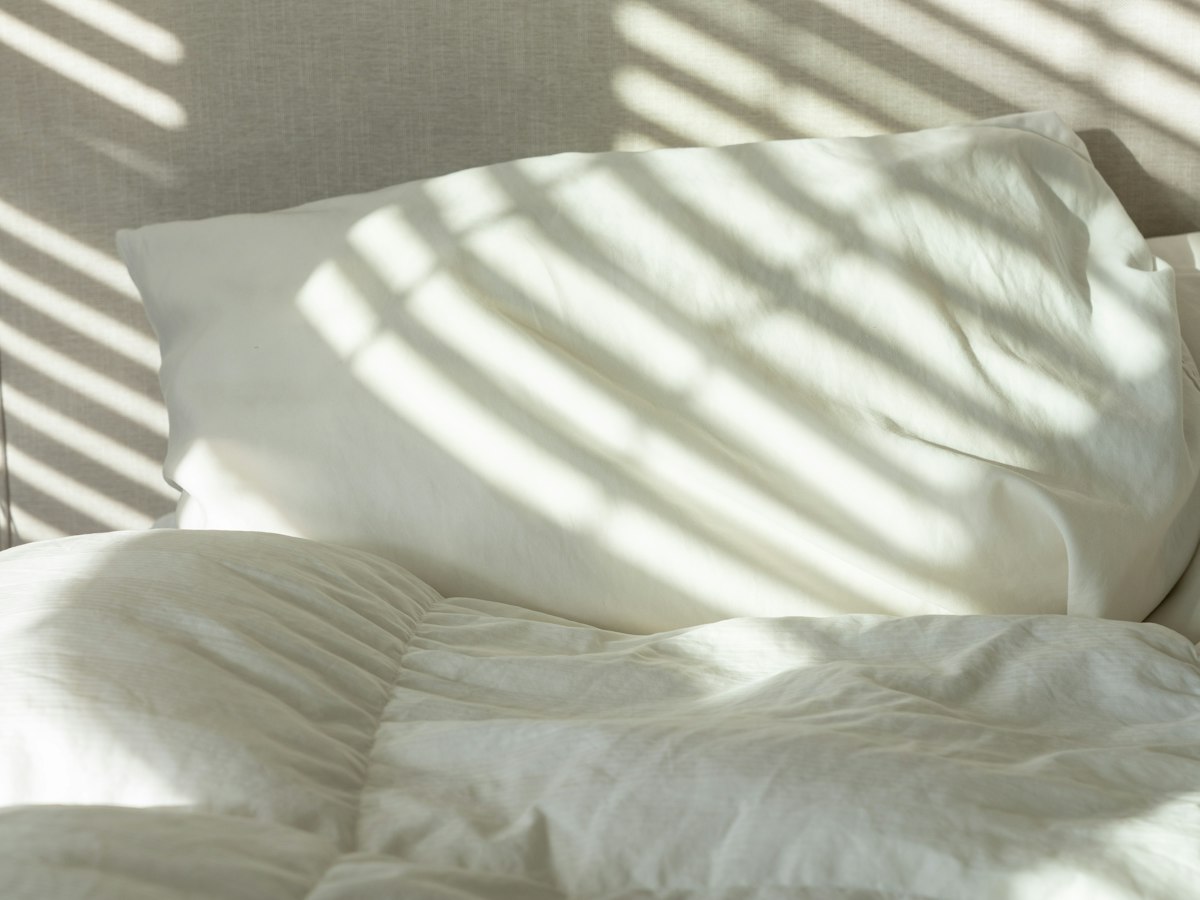
The Scandi bedroom look — calm, textured, slightly rumpled rather than hotel-stiff — comes down to a narrow colour palette and layered texture more than expensive fabric. A £30 linen-look duvet set styled with a textured throw and real-linen pillowcases reads closer to the look than an all-matching, all-white budget set does. If the bed underneath is doing the bedding no favours, the mattress guide and storage bed guide are the two to sort first.
Best overall: Linen-Look Cotton Duvet Set
Dunelm
Linen-Look Cotton Duvet Set
The rumpled, matte linen look without linen's price or its tendency to crease into something closer to unmade than styled.
£30–45
Check price at Dunelm (link coming soon)
Linen-look cotton gets the texture and matte finish that reads as Scandi without linen’s actual drawbacks — heavier creasing, a higher price, and a stiffer break-in period before it softens. Wash on a cool cycle and avoid high heat tumble drying to keep the colour from fading faster than the rest of the set.
Crispest feel: 400 Thread Count Percale Fitted Sheet
The White Company
400 Thread Count Percale Fitted Sheet
Percale weave stays crisp and cool rather than clingy, which reads closer to a hotel bed than a softer sateen weave does.
£35–50
Check price at The White Company (link coming soon)
Percale is a plain, tight weave that dries flatter and feels cooler against skin than sateen, which is the softer, slightly glossier weave most budget sheet sets default to. It’s the one item on this list worth spending a bit more on, since sheet feel is the part of bedding you’re in direct contact with all night.
Best texture layer: Waffle Cotton Throw
Dunelm
Waffle Cotton Throw
Texture does more for a Scandi look than pattern does, and a waffle weave adds it without competing with anything else on the bed.
£18–28
Check price at Dunelm (link coming soon)
A textured throw folded across the foot of the bed is doing more visual work per pound than almost anything else you could add — it breaks up a flat duvet colour without introducing a competing pattern, which is the difference between “layered” and “cluttered” in a Scandi bedroom.
Best small upgrade: DYTÅG Linen Pillowcases, Pair
IKEA
DYTÅG Linen Pillowcases, Pair
Real linen only on the pillowcases keeps the authentic texture where your face actually touches it, without paying linen prices for the whole set.
£15–25
Check price at IKEA (link coming soon)
Buying real linen for just the pillowcases, rather than the full set, gets the texture where you actually notice it — under your face — at a fraction of what a full linen duvet cover and sheet set would cost. Pair with the cotton duvet set above rather than trying to match fabric types exactly; the slight texture contrast is part of the layered look.
What about the duvet itself, not just the cover
A duvet’s tog rating matters more for comfort than anything covered so far, and it’s specific to how warm your flat actually runs — a 4.5 tog summer duvet in a poorly insulated Victorian conversion with single glazing will leave you cold regardless of how good the cover looks. As a rough guide: 4.5–7 tog for a warm flat or summer, 10.5 tog for an all-seasons default, and 13.5 tog or a duvet-within-a-duvet combination for a genuinely cold room or a period building with old windows. Down and feather fill compresses smaller for storage and regulates temperature well but needs dry cleaning or a specialist wash; synthetic fill is fully machine-washable at home and considerably cheaper, at the cost of being bulkier to store. For a first flat where you don’t yet know how the heating performs through a full winter, a synthetic all-seasons duvet is the safer starting purchase over a down one.
Getting the Scandi look on pillows and cushions
Two or three cushions in complementary rather than matching fabrics — a bouclé alongside a linen-look, both within the same narrow palette — do more for the look than a single patterned statement cushion. Keep the count restrained: two to four cushions on a bed reads as styled, six or more starts reading as a hotel display you have to clear off every night. The same restraint applies to the throw above — one folded throw does the job; several stacked together competes with the bedding itself rather than complementing it.
What this guide doesn’t recommend
This guide doesn’t recommend polycotton bedding sets marketed with very high thread-count numbers (800+) at very low prices — genuine high thread counts in 100% cotton cost more than these sets sell for, which usually means the number reflects multi-ply yarn counting rather than fabric quality, and the polyester content is what actually keeps the price down. They’re fine for a spare room; for a bed you sleep in nightly, a lower, honestly-stated thread count in real cotton generally feels better.
How to choose
Palette before pattern. Off-white, oatmeal, soft grey, and one muted accent colour reads as considered; bright colours or a busy print reads as the opposite of calm.
Weave matters more than thread count. Percale for crisp and cool, sateen for soft and slightly warm — pick based on how you actually sleep, not the highest number on the label.
Layer at least two textures. A smooth duvet cover plus a textured throw or knitted cushion does more for the look than a single fabric type throughout.
Wash cool and skip high heat drying. Both shrinkage and colour fade in cotton-linen blends are mostly a washing-temperature problem, not a fabric-quality one.
Frequently asked questions
- What does GSM actually mean for bedding?
- GSM (grams per square metre) measures fabric density and weight, most commonly quoted for duvets and throws rather than sheets. A higher GSM duvet cover feels heavier and more substantial; for the fabric itself it's less important than weave and fibre — a well-made lower-GSM cotton can feel better than a poorly finished higher-GSM one. Don't use GSM alone as a quality shortcut.
- Does thread count actually matter?
- Less than the marketing suggests. Above roughly 300, the difference in feel from a further increase in thread count is small, and manufacturers can inflate the number using multi-ply yarns that don't reflect genuine quality. Weave type — percale (crisp, cool) versus sateen (softer, slightly warmer, more sheen) — makes a bigger practical difference to how the sheet actually feels than thread count does.
- How do I get the Scandi look without buying all-white?
- Stick to a narrow palette — off-white, oatmeal, soft grey, and one muted accent colour like sage or dusty terracotta — rather than pure white or a mix of bright colours. Layer two or three different textures (a linen-look duvet, a waffle throw, a knitted cushion) rather than one flat colour, which is what actually reads as 'considered' rather than 'plain'.
- Will linen-look cotton shrink or fade?
- Cotton-linen blends shrink slightly on the first wash — check the label for a wash temperature (usually 40°C) and stick to it, since washing hotter than specified is the most common cause of shrinkage complaints. For colour, wash separately from anything with a strong dye for the first few washes, and avoid tumble drying on high heat, which fades muted colours faster than air drying or a low-heat cycle.
- How often should bedding actually be washed?
- Sheets and pillowcases roughly once a week, duvet covers every one to two weeks, and a duvet itself twice a year unless it's specifically machine-washable — check the care label, since some duvets need dry cleaning or specialist washing due to their fill. More frequent washing at the correct (usually cooler) temperature does less damage to colour and fabric than infrequent washing on a hot cycle.